
SaaS Link Building: Proven Strategies + Real SaaS Examples

Natalia Toth
If you’re looking for SaaS link building strategies that actually work, you’re in the right place. In this guide, we’ll break down:
- Why link building for SaaS companies is different from traditional SEO.
- 5 proven strategies and patterns behind successful SaaS link building campaigns.
- Some helpful tools along the way, such as Ranking Raccoon.
By the end, you’ll know how successful SaaS companies build backlinks in a scalable, repeatable way. You’ll also have a clear framework for building high-quality backlinks that support long sales cycles, trust-driven funnels, and sustainable SaaS growth.
Without further ado, let’s see how to crack the link-building code.
Why SaaS Link Building Is Different
SaaS link building fundamentally differs from traditional link building. But why is that exactly? Here are just a few of the reasons you’re probably already thinking about:
- SaaS companies operate in highly competitive, fast-moving digital markets
- Where search intent is vague, research-heavy, and problem-oriented
- Decision-making takes longer, with sales cycles that are trust-driven and complex
Most SaaS prospects aren’t actively searching for a specific product. Instead, they’re researching problems, workflows, comparisons, and alternatives. They’re trying to understand their options and find the right solution—often weeks or even months before making a financial decision or committing to a subscription.
As a result, backlinks need to support education, authority, and credibility, not just rankings. A single landing page or a few tactical guest posts won’t convince cautious SaaS buyers. Effective SaaS link building has to reinforce trust across the entire funnel.
Another key difference is that SaaS products are intangible and often complex. This means backlinks are typically earned through educational content, original data, integrations, and thought leadership.
High-performing SaaS backlink strategies are closely tied to SEO, product marketing, and content strategy—not treated as a standalone tactic.
5 SaaS Link Building Strategies That Actually Work
SaaS link building isn’t about chasing every possible backlink opportunity. In highly competitive markets, only a handful of strategies consistently deliver results.
The strategies below are proven patterns used by successful SaaS companies to earn high-quality backlinks, build authority, and support long sales cycles. Let’s break them down.
1. Product-Led Link Building
Product-led link building is one of the most effective SaaS link building strategies. It aligns directly with user value and provides high-utility resources which help establish the thought leadership position.
Why product-led link building works for SaaS?
In SaaS, buyers don’t convert impulsively. They research, compare, and educate themselves long before signing up. In-depth guides, frameworks, tools or original industry data studies support this journey all the way through the sales funnel.
Product-led content also has a higher chance of attracting editorial backlinks naturally, and you're guaranteed to have more success in a backlink exchange situation.
SaaS link building example: Custify
A great example of this approach is Custify, a customer success software built for SaaS teams.
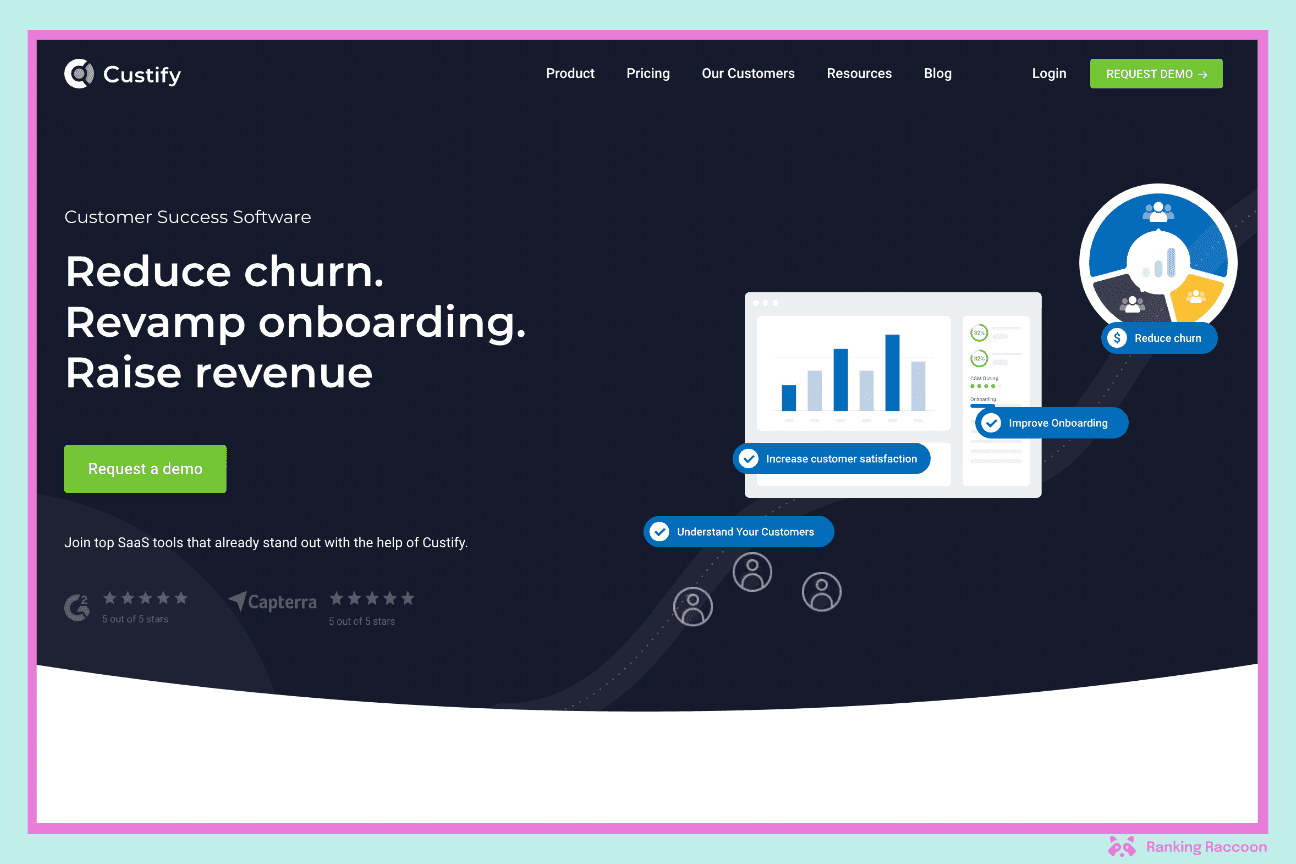
- Referring domains: 2.1K
- Total backlinks: 6.6K
- New links in the last 30 days: +167
- Prominent referrers: Yahoo, Zendesk, Dribble, Hubspot
These links weren’t built through aggressive promotion or one-off campaigns. They were earned by consistently publishing problem-solving content tightly connected to the product’s core use case.
One of Custify’s strongest link magnet is its Customer Churn Guide, which alone attracted:
- 133 referring domains
- 211 backlinks
Why does this page work so well? Because churn is a critical, universal problem for SaaS businesses—and Custify doesn’t just explain it. The guide offers practical frameworks, actionable insights, and deep educational value, making it a natural reference point for other SaaS, marketing, and customer success blogs.
How to replicate Custify’s product-led link building strategy?
Custify’s success comes from a combination of strategic topic selection, content depth, and search intent alignment that makes it a natural reference point across the SaaS ecosystem.
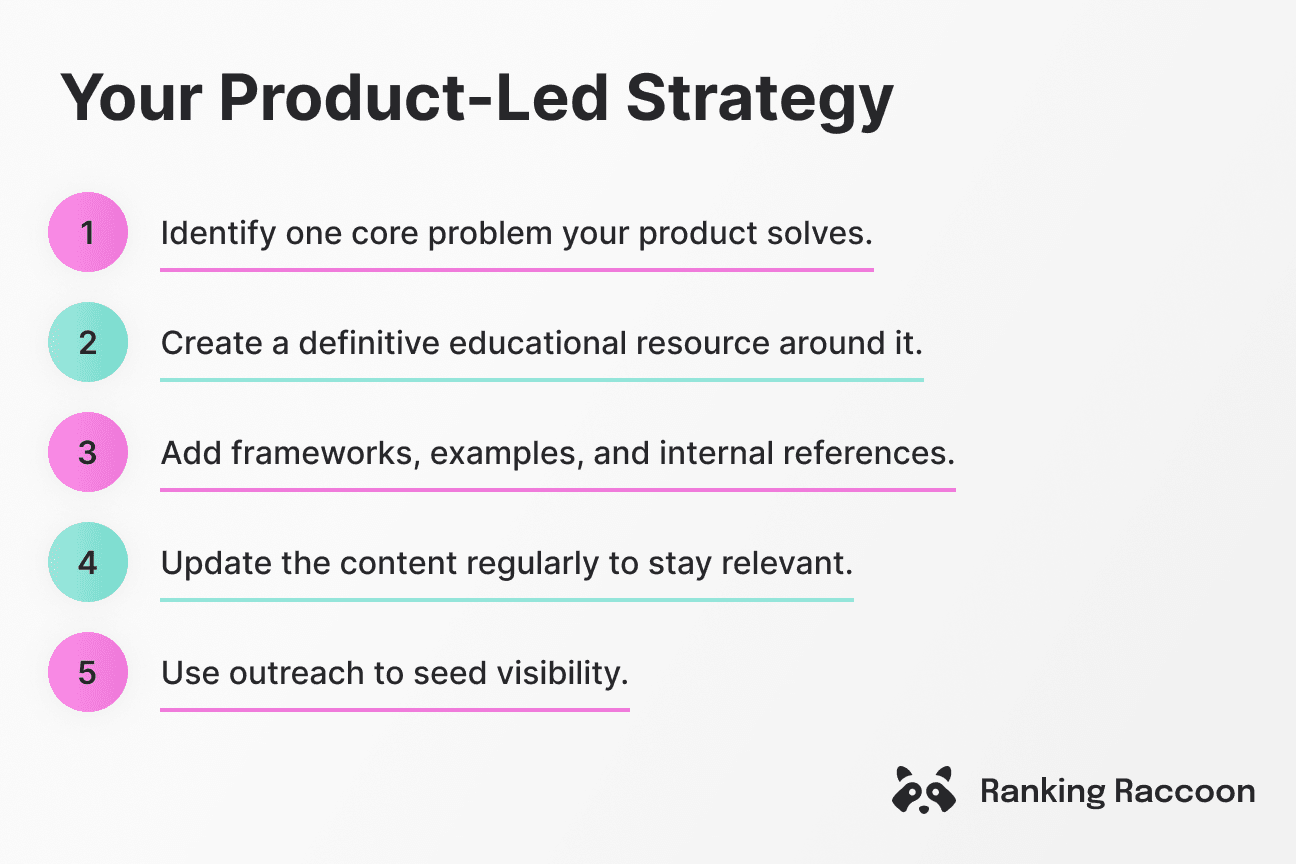
1. Identify one core problem your product solves.
Focus on a pain point that’s both central to your product and widely experienced across your market.
2. Create a definitive educational resource around it.
Think beyond blog posts! Build a guide, framework, or resource that aims to be the industry reference on the topic.
3. Add frameworks, examples, and internal references
Make it more enjoyable and readable (both to real-life users and search engines). Clear structure increases linkability and makes the content easier to quote and summarise.
4. Update the content regularly to stay relevant.
Updates help maintain rankings, freshness, and continued link growth over time. In highly competitive niches I’d suggest updating your key content monthly.
5. Use outreach to seed visibility.
Strong SaaS content rarely earns links on its own at launch. Targeted outreach is essential to get the right people to notice it, reference it, and start the first wave of backlinks.
Fun fact: Custify has been with Ranking Raccoon for a while now and we're proud to have sites like them on the platform.
Custify knows how to make the most out of SaaS link-building tactics. They have it all: in-depth guides targeting long-tail keywords, and clear infographics (making way for image link-building).
"Our strategy has always been to prioritize quality over quantity without entirely discounting quantity either. The customer success space is highly competitive - so we needed the numbers as well as the high-authority sites. It took the combined tactics of great content, near-constant outreach, and consistent updates to get here. Even so, there’s a lot of noise that can easily defocus you, so I love having a platform to help me filter that noise, discard the spam, and connect with other professionals looking for the same thing."
Bogdan Petre Minuț, Content & SEO Manager at Custify

Want to exchange links with trusted websites like Custify? Join Ranking Raccoon for free today!
2. Creating Data-Driven SaaS Content
One of the most reliable ways to acquire links as a SaaS company is creating data-driven content. Believe me, generic content and AI-generated advice are already everywhere—you can rise above and stand out from the crowd with really useful statistics and data.
Why does original research attract high-quality backlinks?
While most SaaS blogs repackage existing ideas, original research creates something genuinely new, giving other publishers a clear reason to link back.
For SaaS companies, this approach works exceptionally well because software products naturally generate data, patterns, and insights. Usage trends, benchmarks, surveys, and aggregated metrics turn internal knowledge into external authority.
A great example of the usage of statistics: Deel
Deel shows how publishing proprietary data, clear definitions, and regularly updated reports can turn a SaaS company into an authoritative source that major media outlets want to link to.
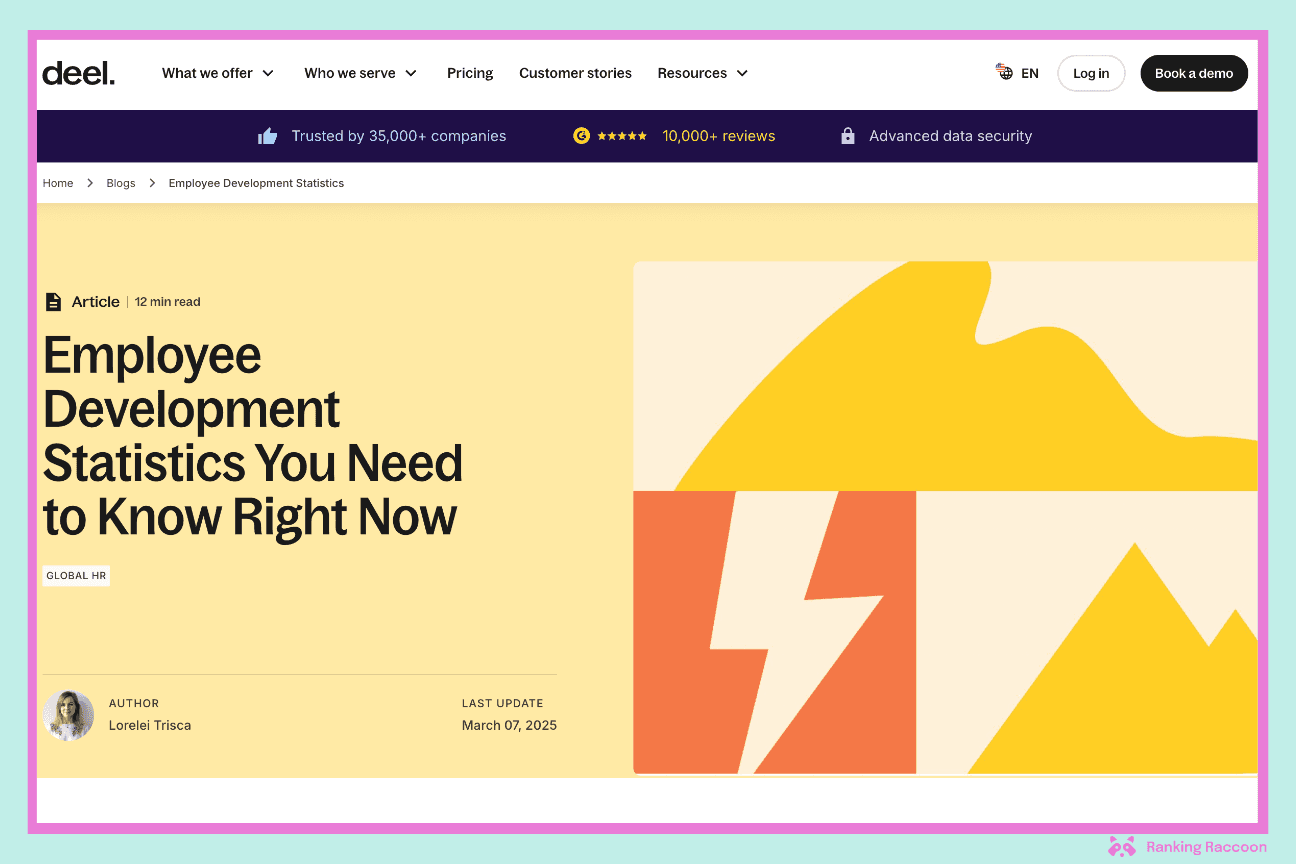
- Referring domains: 10K
- Total backlinks: 648K
- New links in the last 30 days: +200K
- Prominent referrers: Yahoo, Zendesk, Arsenal, Hubspot
A strong example of data-driven link-earning content in Deel’s “Employee Development Statistics You Need to Know Right Now” article.
- 290 referring domains
- 470 backlinks
This piece goes beyond opinion and general advice by curating relevant workforce statistics from reputable sources and organizing them into a single, insightful resource.
How to replicate Deel’s data-driven SaaS link building strategy
Deel’s employee development statistics page works because it turns data into a reusable industry reference. The good news? This approach is highly replicable (even without access to massive proprietary datasets).
Just follow these steps:
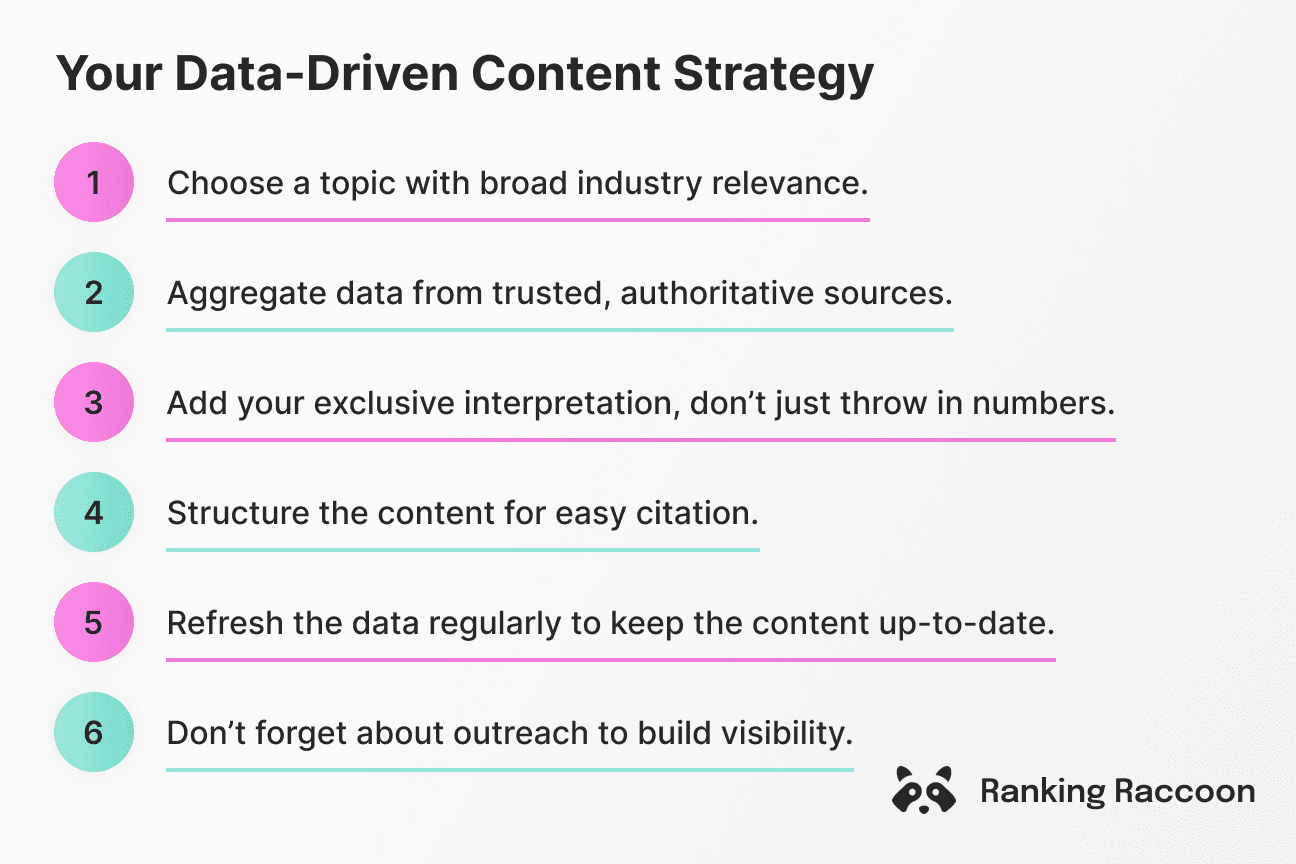
1. Choose a topic with broad industry relevance
Focus on problems or themes that extend beyond your product’s immediate use case (like in Deel's case it can be employee development, retention, productivity, remote work). Broader relevance increases link potential across multiple industries.
2. Aggregate data from trusted, authoritative sources
You don’t necessarily need original first-party data to start. Curate high-quality statistics from credible reports, studies, and industry research, then organize them into a single, cohesive resource. Just don’t forget to give them a mention and provide the source of the data origin (It makes you even more an expert-level content writer).
3. Add your exclusive interpretation, don’t just throw in numbers
The real value comes from context. Explain what the data means, why it matters, and how trends impact real business decisions. This transforms a statistics list into thought leadership content.
4. Structure the content for easy citation
Use clear headings, short explanations, and skimmable sections. The easier it is to quote or reference a specific insight, the more likely other publishers are to link to it. Your readers will also find it more enjoyable.
5. Refresh the data regularly to keep the content up-to-date
Updating statistics annually (or quarterly, if possible) keeps the page relevant and encourages recurring backlinks as other content gets updated too.
6. Don’t forget about outreach to build visibility
Data-driven content rarely spreads on its own at launch. Early SEO outreach to bloggers, journalists, and industry writers helps the page gain its first wave of backlinks.
3. Integration & Partner-Based Link Building
Integration- and partner-based link building might be one of the most underrated yet powerful SaaS link building strategies. This is where backlinks are earned as a natural byproduct of real product relationships.
Why is it especially effective for SaaS companies?
Because integration-led link building aligns SEO with product value and business logic.
- Links are business-driven: Partners link because it makes sense for their users, not because of an SEO request.
- Backlinks naturally come from highly relevant domains: Integrations usually live within the same or adjacent niches, strengthening topical authority.
- Pages support mid- and bottom-funnel users: Integration pages help users compare, evaluate, and decide—making them valuable beyond rankings.
- The strategy scales with the product: Every new integration creates a repeatable opportunity for content, mentions, and backlinks.
A standout example of integration-based link building is Zapier.
Zapier’s entire product is built around integrations, connecting thousands of SaaS tools across marketing, sales, support, and operations.
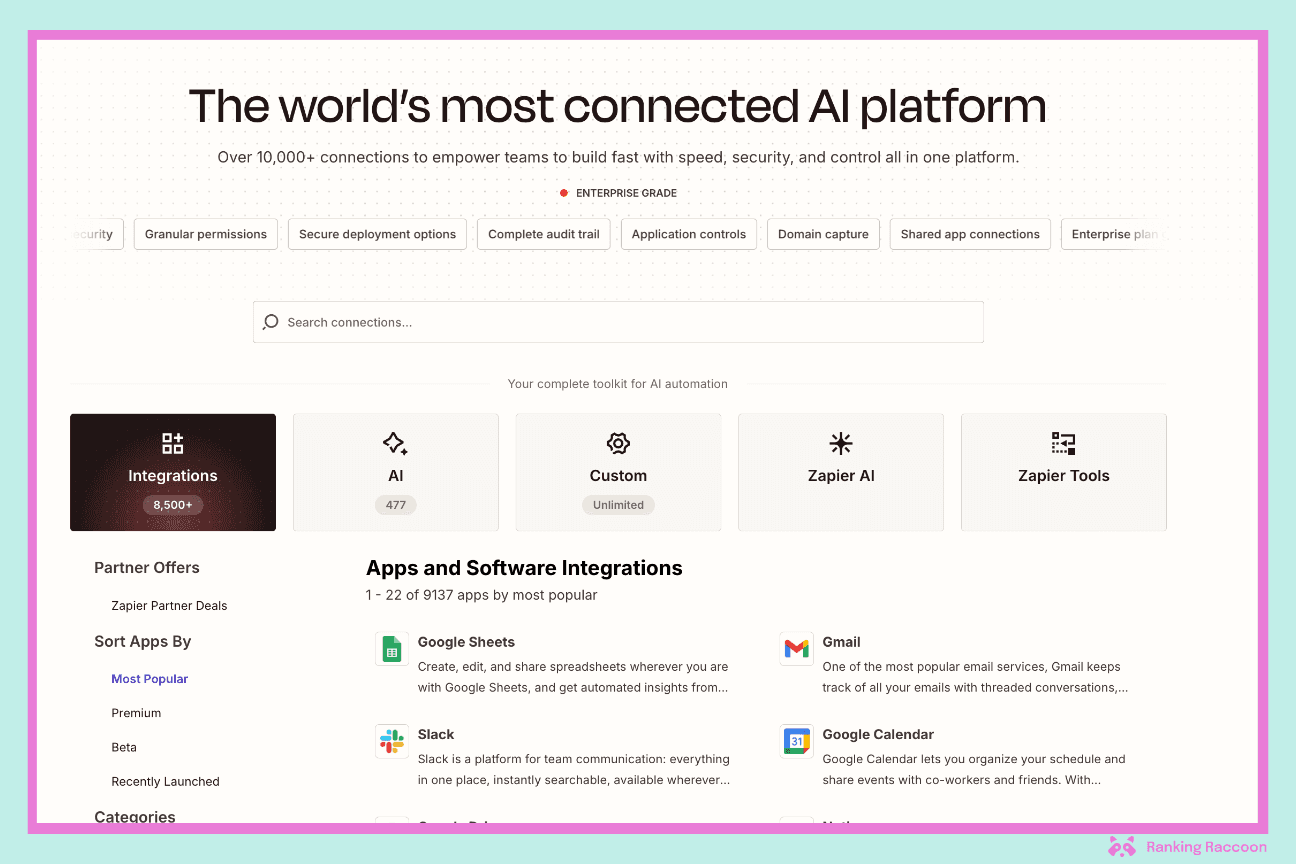
Each integration is supported by:
- A dedicated integration landing page
- Listings in partner directories and app marketplaces
- Mentions across partner documentation and blogs
Because these integrations deliver real value, partners naturally link back to Zapier—often from high-authority, product-focused pages. This creates a massive network of contextual, durable backlinks without relying on traditional link building campaigns.
- Referring domains: 87.9K
- Total backlinks: 7.5M
- New links in the last 30 days: +9.7K
- Prominent referrers: Coursera, Hubspot, Atlassian
How to replicate the integration strategy?
You don’t need thousands of integrations to apply this strategy. Even a small SaaS can build a scalable integration-led link system by following these steps:
1. Identify tools your users already rely on.
Look for complementary products that naturally fit into your users’ workflows.
2. Create dedicated integration or partner pages.
Each integration should have its own page explaining the use case, benefits, and setup.
3. Ensure reciprocal visibility
Work with partners to secure mentions on their integration pages, marketplaces, or documentation.
4. Support integrations with co-marketing content
Case studies, joint blog posts, or webinars unlock additional link opportunities.
5. Standardize the process to scale
Treat integrations as repeatable SEO assets, not one-off announcements.
4. Programmatic SEO for SaaS Link Building
In competitive SaaS markets, ranking with generic content is hard enough, but earning links with it is even harder. Programmatic SEO solves this by covering entire topic clusters and search patterns at scale, especially where SaaS buyers actually spend time: the comparison and evaluation stage.
These pages aren’t flashy. They won’t win design awards. But they’re incredibly useful. And usefulness is exactly what makes them link-worthy.
Why programmatic SEO works
Programmatic SEO relies on systems: consistent templates, clear logic, and real data. It is a strategy where SaaS companies build large sets of structured, scalable pages targeting long-tail queries like comparisons, alternatives, use cases, or integrations. Following exactly how SaaS buyers research tools… all while securing those hard-to-earn backlinks:
- Pages like “X vs Y” or “X alternatives” are frequently referenced by bloggers, reviewers, and comparison sites.
- Instead of linking to a homepage, other sites can reference very specific, relevant pages.
- Hundreds of interlinked pages signal strong subject-matter coverage to search engines.
As more pages rank, they will attract more organic mentions and backlinks without constant outreach.
A well-known SaaS link building example: Notion
A familiar name in the SaaS space, Notion shows how programmatic SEO works at scale.
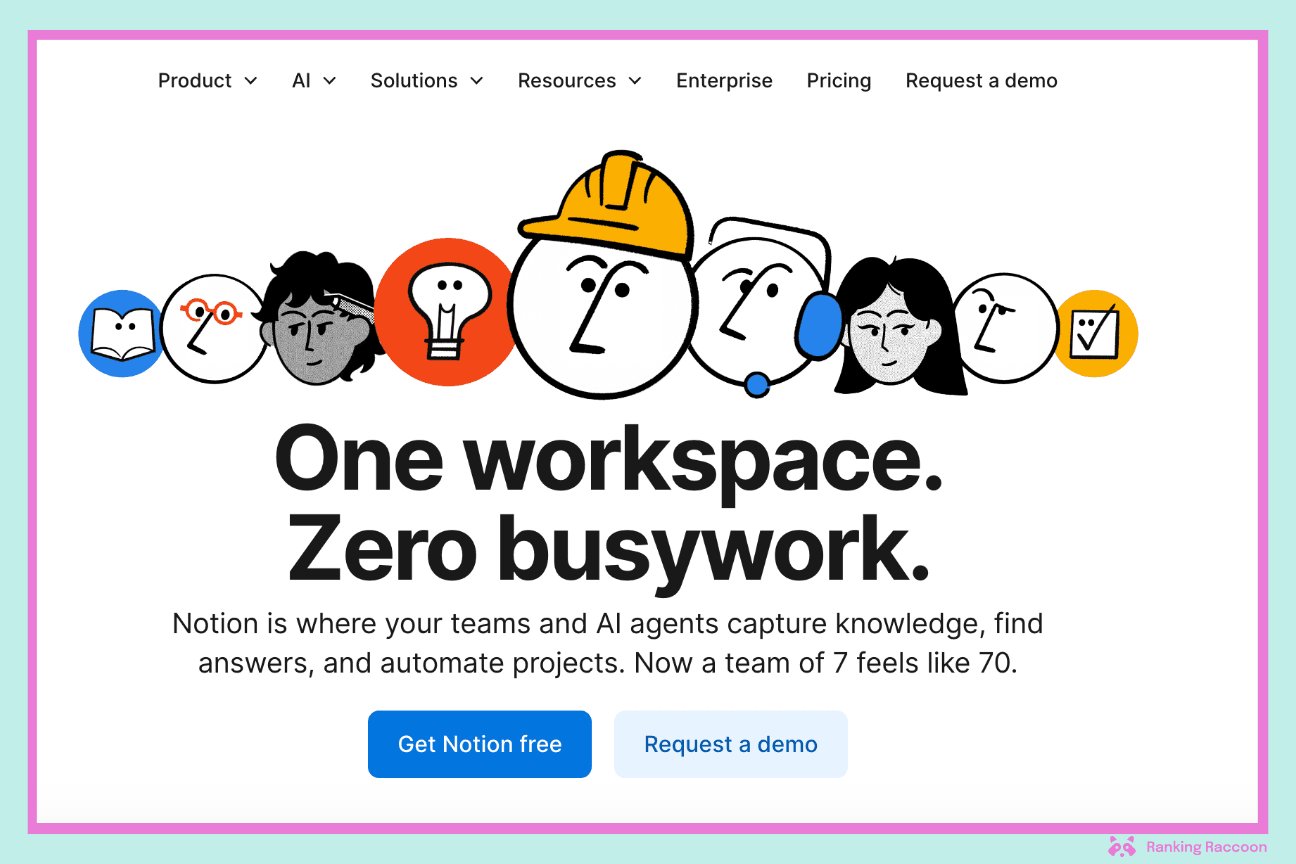
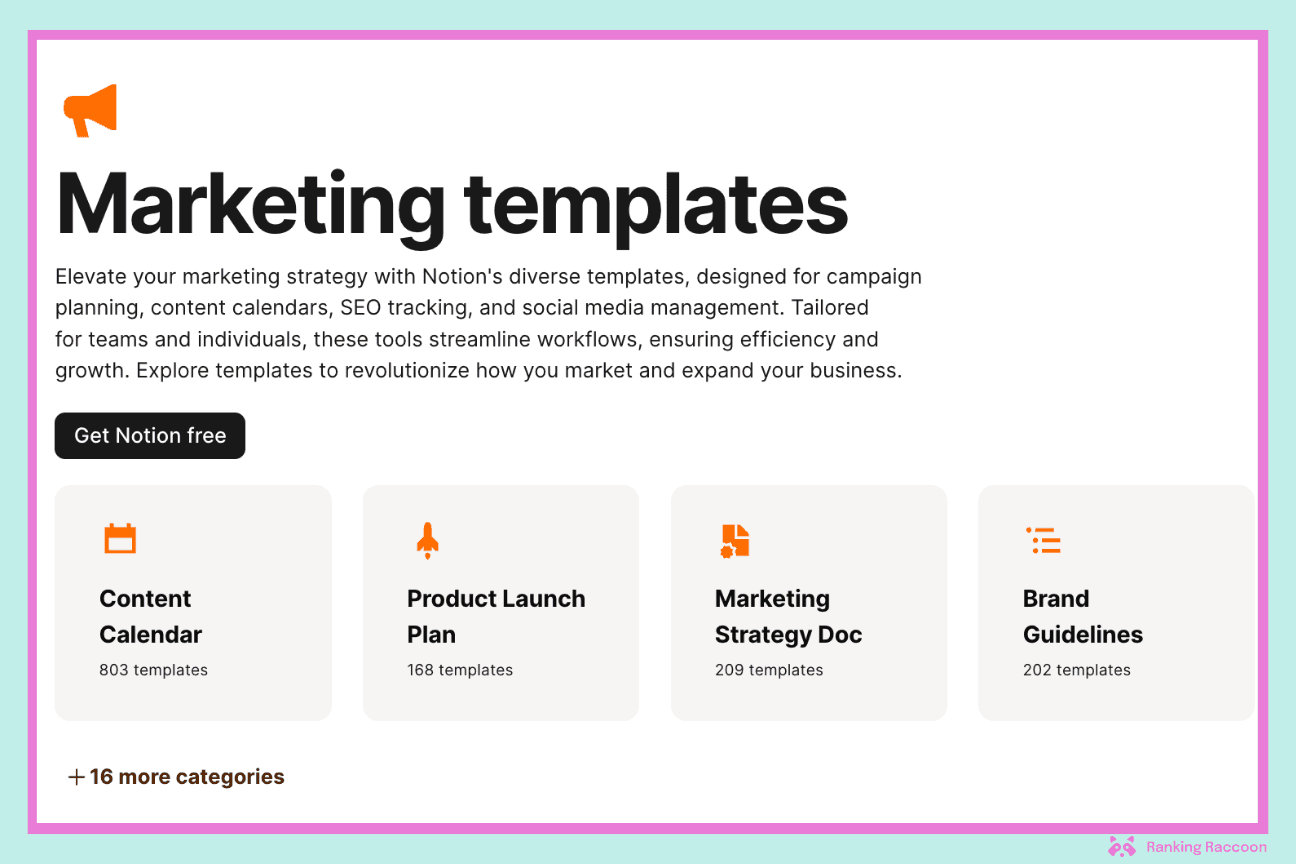
Notion has built a massive footprint of systematically structured pages around:
- Use cases (e.g. project management, documentation, wikis)
- Team types and roles
- Comparisons and alternatives
- Templates and workflows
Many of these pages are templated, but highly relevant, which makes them easy to reference in blog posts, tutorials, and tool roundups. Over time, this structure has helped Notion earn deep, contextual backlinks pointing to individual pages, not just the homepage.
- Referring domains: 25K
- Total backlinks: 713M
- New links in the last 30 days: +5K
- Prominent referrers: OpenAI, Hubspot, Semrush
How to replicate Notion’s link building strategy?
Are you curious how to replicate this strategy? First of all, you’ll need structure and discipline. Let’s take a look at the required steps:
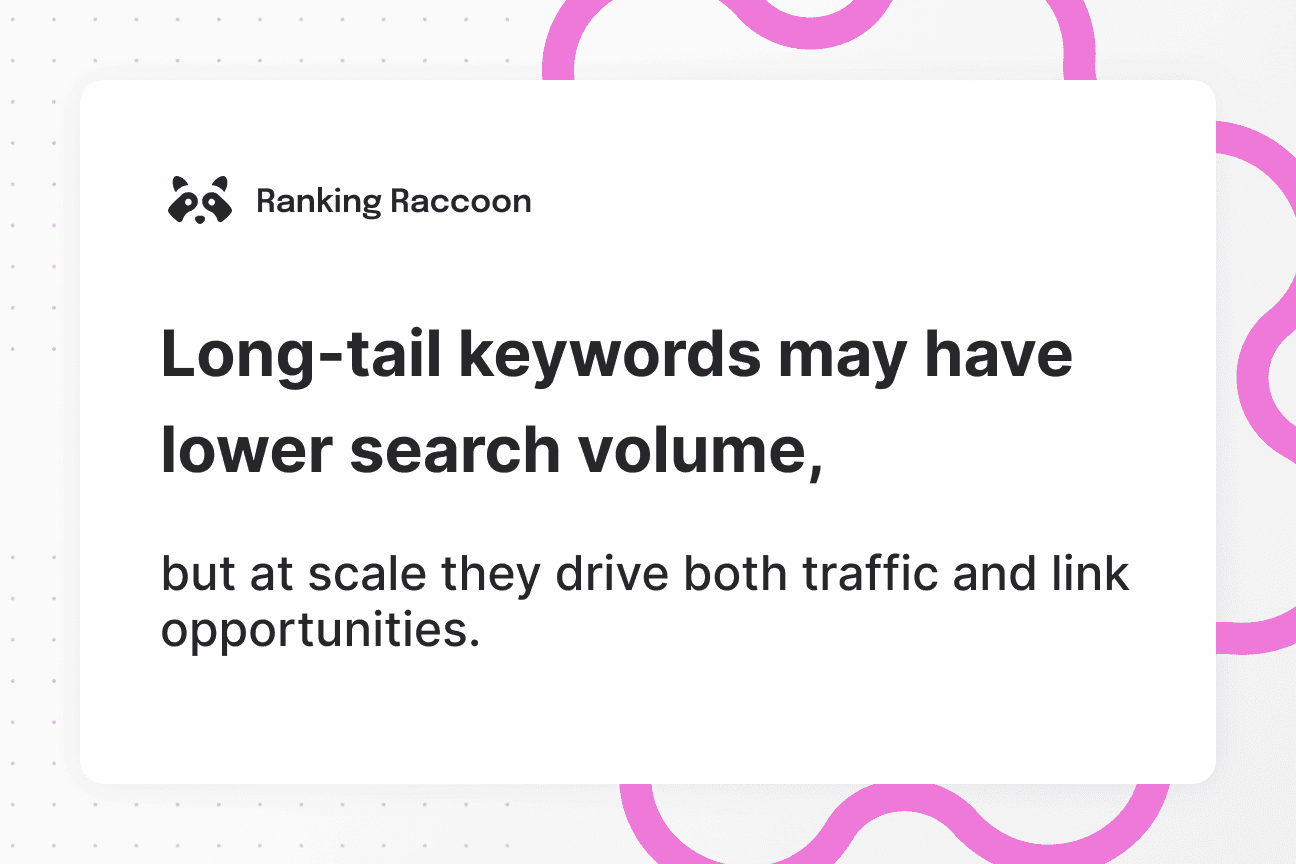
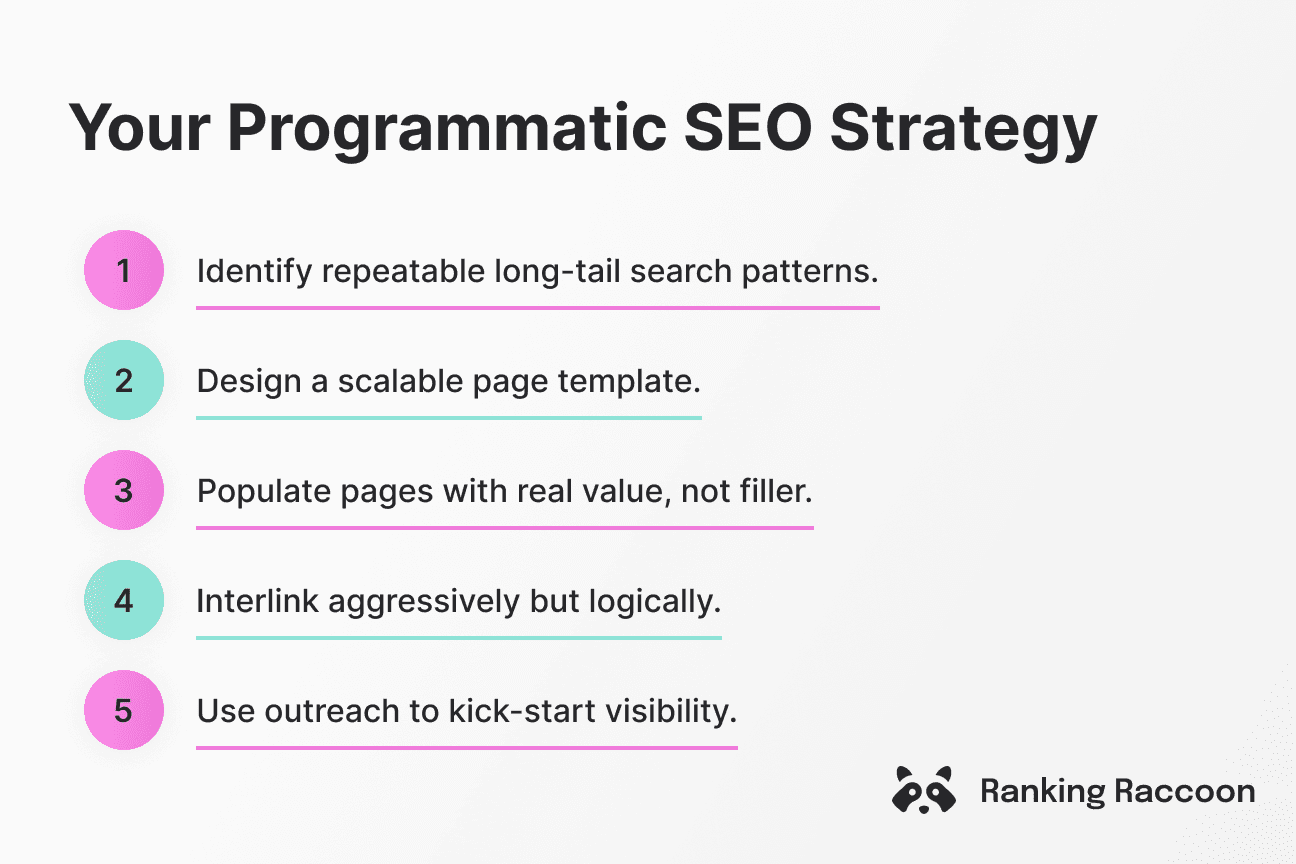
1. Identify repeatable long-tail search patterns
Focus on queries that follow a clear formula and reflect real SaaS research behaviour, such as comparisons, alternatives, industries, roles, or integrations.
2. Design a scalable page template
Each page should have consistent sections, internal links, and clear intent alignment.
3. Populate pages with real value, not filler
Even templated pages must offer genuine insights, examples, or explanations to be link-worthy.
4. Interlink aggressively but logically
Strong internal linking helps distribute authority and improves crawlability.
5. Use outreach to kick-start visibility
Targeted outreach is essential to surface your best pages to bloggers, creators, and SaaS publishers who already cover similar topics.
5. Thought Leadership & Expert-Led Content
Thought leadership–based link building relies on expert insights, strong opinions, and original frameworks that shape how people think about a problem.
In crowded SaaS markets flooded with the same “best practices,” expert-led content is what stands out—and becomes a source others reference, quote, and link to.
Why does sharing your expert opinion work?
- Strong opinions create citations
Clear points of view, contrarian takes, and original frameworks are easy to reference in articles, newsletters, and LinkedIn posts.
- Expertise builds authority
Links point not just to a page, but to a voice. A "voice of reason" reinforces trust in the brand behind it.
- Perfect fit for editorial backlinks
Journalists, bloggers, and analysts frequently link to expert commentary to support their arguments.
- Works high in the funnel
Thought leadership helps frame problems early, long before users start comparing tools.
A strong example of thought leadership
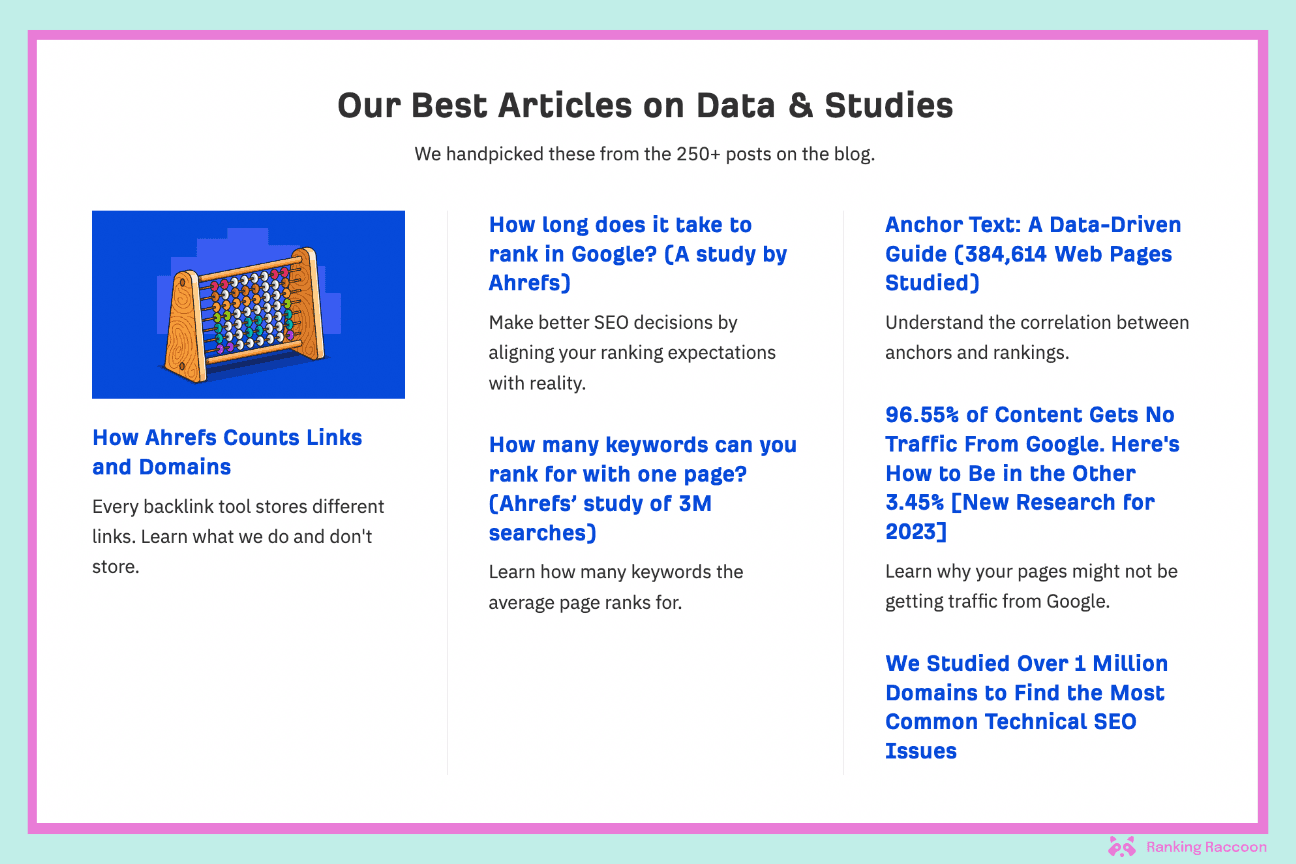
A familiar name in the SEO world, Ahrefs is a strong example of thought leadership–driven link building. They regularly publish:
- Opinionated takes on SEO trends
- First-hand experiments and lessons learned
- Clear frameworks that challenge common assumptions
Much of this content’s purpose is to educate, influence, and lead the conversation, which is exactly why it earns a steady stream of high-quality editorial backlinks.
- Referring domains: 96.9K
- Total backlinks: 4M
- New links in the last 30 days: +9.9K
- Prominent referrers: Wix, Adobe, The New York Times
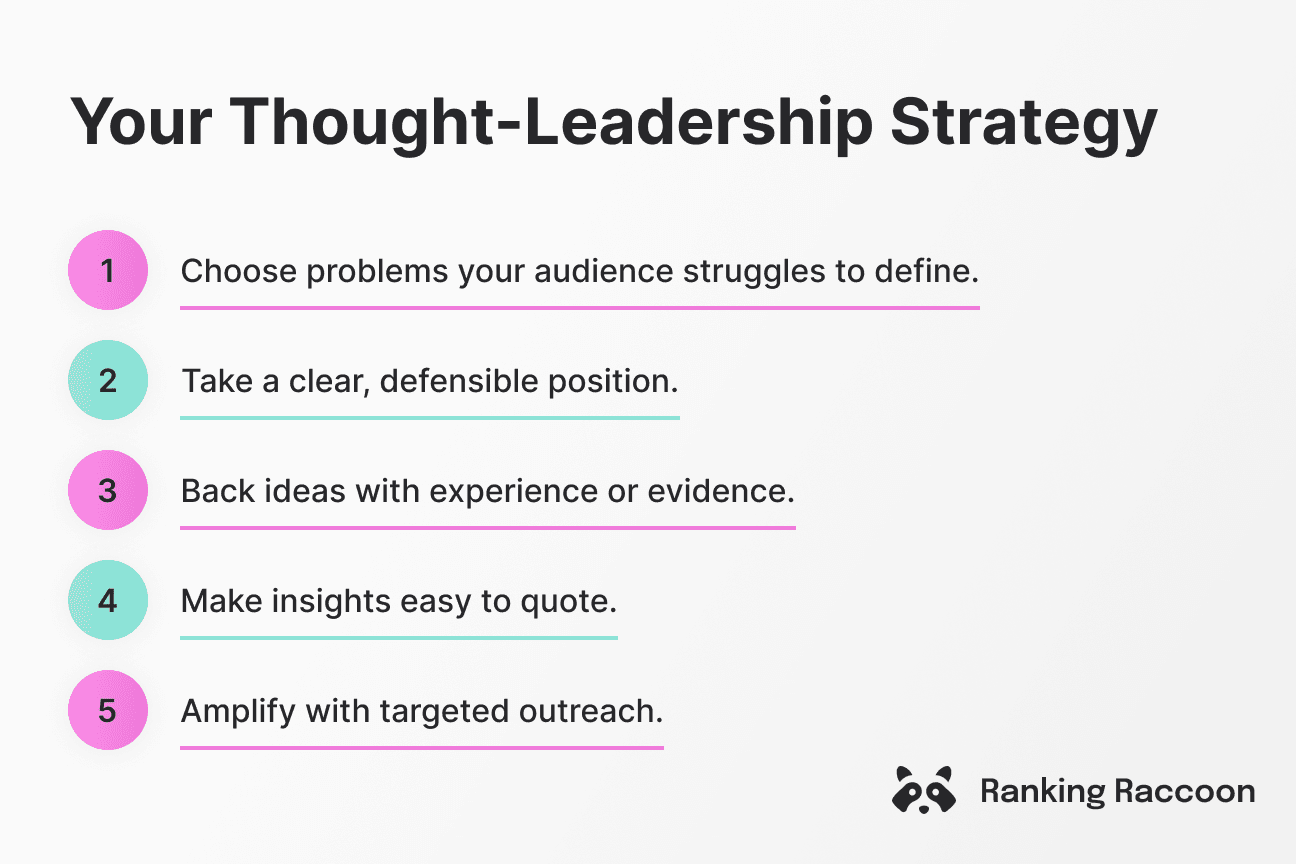
How to replicate the thought-leader strategy?
Just be useful and credible! Here’s how:
1. Choose problems your audience struggles to define
Focus on areas where there’s confusion, debate, or outdated thinking.
2. Take a clear, defensible position
Avoid vague advice. Clear opinions are more linkable than safe summaries.
3. Back ideas with experience or evidence
Use real examples, experiments, or data to support your perspective.
4. Make insights easy to quote
Short frameworks, definitions, and punchy takeaways increase editorial reuse.
5. Amplify with targeted outreach
Outreach helps expert-led content reach writers, creators, and industry voices who are likely to reference it.
Common SaaS Link Building Mistakes to Avoid
After seeing proven approaches in action, let’s take a closer look at the most common SaaS link building mistakes that quietly hold businesses back.
Treating link building as a numbers game
Chasing backlink volume or domain metrics creates a false sense of progress. You might see numbers go up, but rankings, trust, and conversions often don’t follow. In SaaS SEO, a handful of highly relevant editorial links can outperform dozens of low-quality ones, because they reinforce topical authority instead of diluting it.
Relying on a single strategy
Only guest posts. Only free tools. Only PR.
Pushing one tactic too hard eventually leads to diminishing returns. Links start coming from the same sources, the same angles, and the same types of pages. SaaS link building works best when multiple strategies support each other, creating a healthier, more natural link profile.
Ignoring long-tail and mid-funnel pages
Many SaaS teams focus link building almost exclusively on the homepage or top-of-funnel blog posts. The problem? These pages are often the hardest to link to naturally.
Comparison pages, alternatives, use cases, and integration pages align far better with how people reference tools in real content (and they frequently convert better because they sit closer to the decision stage).
Overusing link exchanges
One-to-one link swaps and repeated links from the same domain may feel efficient, but their SEO value drops quickly. At scale, they create unnatural patterns that search engines tend to ignore (or even punish).
Expecting fast results
SaaS link building doesn’t reward impatience. The absence of visible gains in the first 30–60 days often leads teams to abandon strategies too early. In reality, authority builds slowly, but steadily.
Publishing content without real expertise
Content that lacks firsthand experience, original insight, or real data struggles to earn trust. Without trust there are no links, and without backlinks you have basically zero chance to rank.
Key Takeaways for SaaS Link Building Success
The examples and strategies in this guide all point to the same conclusion: successful SaaS link building is never accidental. Across the five core strategies (from product-led content and original research to integrations, programmatic SEO, and thought leadership) one pattern is clear: links follow value. The SaaS companies that win aren’t chasing backlinks; they’re building systems that attract more opportunities.
This is where the right tooling makes a real difference. Ranking Raccoon helps SaaS teams turn their link building strategy into execution by focusing on collaboration, relevance, and long-term value.
With Ranking Raccoon, you can:
- Discover manually vetted websites and like-minded SaaS partners for meaningful link collaborations
- Build high-quality, editorial backlinks without cold outreach
- Use a built-in networking platform with chat to connect and collaborate directly
- Save time with a clean, structured workflow designed specifically for SaaS marketers
SaaS link building is about doing the right things, consistently. If you’re ready to move from theory to execution, Ranking Raccoon is built to help you get there.
Ready to take action?

Natalia Toth
Marketing Manager